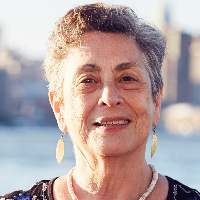
Toby Faye Mailman, LCSW
New York · 25 years in practice
Toby Faye Mailman is a licensed clinical social worker who helps people facing stress, anxiety, trauma, depression, relationship strain, and parenting challenges.
License and registration
- LCSW, New York
- 063392 · expires February 2028
- NPI
- 1447320882 · national provider identifier
- Years in practice
- 25
- Languages
- English, Spanish
Details are as listed on the therapist's public professional profile. You can check the license with the issuing state board, and the NPI with the national registry.
About Toby
Toby Faye Mailman is a licensed clinical social worker who helps people facing stress, anxiety, trauma, depression, relationship strain, and parenting challenges. She works with adults to address grief, anger, career shifts, compassion fatigue, and life changes. She speaks English and Spanish and practices from New York.
She approaches therapy as a collaborative process. She aims to build trust first, then uses conversation and practical skills to help people better manage emotions and situations.
Background and approach
Sessions tend to follow a regular weekly or bi-weekly rhythm to maintain progress. Her ways of working draw on Emotionally-Focused Therapy and attachment-based ideas to look at how emotions and close relationships shape reactions. She also uses client-centered listening and elements of cognitive behavioral and dialectical behavior methods to teach coping skills and change unhelpful patterns.
Over 25 years in practice, she has supported people from a range of cultural backgrounds and sexual orientations, and she pays attention to cultural norms when they matter in therapy. She has experience addressing additional concerns like abandonment, caregiver stress, chronic illness, addiction, first responder issues, domestic violence, and hoarding.
Sessions may include talk, skills practice, and reflective work aimed at clearer thinking and calmer responses. People who want to begin are invited to complete a short matching questionnaire and schedule their first session through the Start Therapy button.
Focus areas and approaches
Everything Toby lists on their public professional profile, in their own terms.
- Stress, Anxiety
- Trauma and abuse
- Self esteem
- Depression
- Relationship issues
- Grief
- Parenting issues
- Anger management
- Career difficulties
- Coping with life changes
- Compassion fatigue
- Abandonment
- Caregiver issues and stress
- Chronic pain, illness, and disability
- Co-morbidity
- Commitment issues
- Communication problems
- Control issues
- Coping with natural or human-caused disaster
- Domestic violence
- Drug and alcohol addiction
- First responder issues
- Forgiveness
- Guilt and shame
- HIV / AIDS
- Hoarding
- Immigration issues
- Mood disorders
- Multicultural concerns
- Obsessions, compulsions, and OCD
- Panic disorder and panic attacks
- Personality disorders
- Phobias
- Post-traumatic stress
- Self-harm
- Sexual assault and abuse
- Social anxiety and phobia
- Women's issues
Approaches Toby names
- Emotionally-Focused Therapy (EFT)
- Attachment-Based Therapy
- Client-Centered Therapy
- Cognitive Behavioral Therapy (CBT)
- Dialectical Behavior Therapy (DBT)
- Existential Therapy
- Mindfulness Therapy
- Motivational Interviewing
- Narrative Therapy
- Psychodynamic Therapy
- Solution-Focused Therapy
- Trauma-Focused Therapy
- Internal Family Systems
Naming an approach is not evidence of training in it. This directory copies what each therapist lists and does not check training records.
Online support
Approaches that guide online work
Emotionally-Focused Therapy looks at how strong feelings shape relationships and behavior, helping people name and shift emotional responses that keep them stuck. Attachment-Based Therapy explores patterns from early close relationships and how those patterns affect current reactions, useful for managing fear of abandonment or connection difficulties. Client-Centered Therapy centers the person's experience, using active listening and empathy to help someone find their own solutions and build self-trust.Finding the right approach is part of the work. The therapist will talk with each person about their goals and preferences and then suggest which methods to try first. Decisions about methods are collaborative and can change as needs evolve.
Online sessions use video calls, phone sessions, live chat, or text-based messaging to make therapy more flexible. Video lets people work face to face when that helps, phone calls use less data and can fit into a work break, live chat allows quick check-ins, and messaging supports ongoing reflection between sessions. These options help people keep therapy consistent around busy lives and varying schedules.
We will earn a commission if you sign up through our link, at no cost to you. It does not change what you pay or the order of the listings.
Questions people ask
What kinds of problems does this therapist help with?
She works with adults on stress, anxiety, trauma and abuse, depression, relationship concerns, grief, parenting strain, anger, career changes, and compassion fatigue, among other issues.
How would you describe her therapeutic style?
She focuses on building trust and then uses a mix of emotional work and practical skills. The style is collaborative and tailored to each person's needs.
What background does she have in therapy?
She has 25 years of clinical experience working with individual adults and has practiced with people from diverse cultural and sexual orientation backgrounds.
Where is she licensed and based?
She is a New York State licensed clinical social worker (LCSW) practicing from New York.
Which languages are supported for sessions?
Sessions are offered in English and Spanish.
What session formats are available?
She offers video calls, phone sessions, live chat, and text-based messaging to accommodate different needs and schedules.
How are fees and payment handled?
Cost varies with location and therapist availability; sessions use a subscription that can be canceled at any time.
How do I begin working with her?
Click the Start Therapy button, complete a short matching questionnaire, and schedule according to the therapist's availability.
More therapists in New York
See all
JoAnn Park
LCSW
Experienced LCSW focusing on emotion and healing
- Stress, Anxiety
- Addictions
- Relationship
Tammy Piazza
LMHC
Practical skills for stronger emotional balance
- Stress, Anxiety
- Addictions
- Trauma and abuse
Rachael Figueroa
LCSW
Compassionate, emotion-focused therapy for real life
- Stress, Anxiety
- Grief
- Anger
Is this your profile?
Ask us to correct details or take the page down.
Contact us